Showing posts with label alternative fuel. Show all posts

Thursday, March 23, 2006

Hybrid/Alternative fuel talk again, I'm going to sound like a broken record here


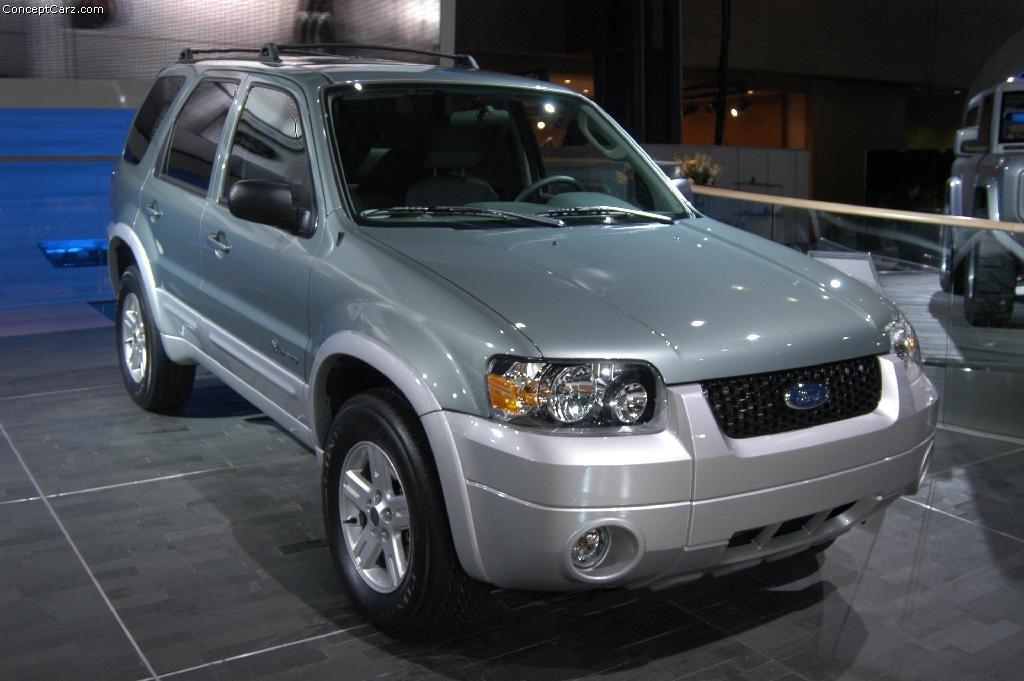
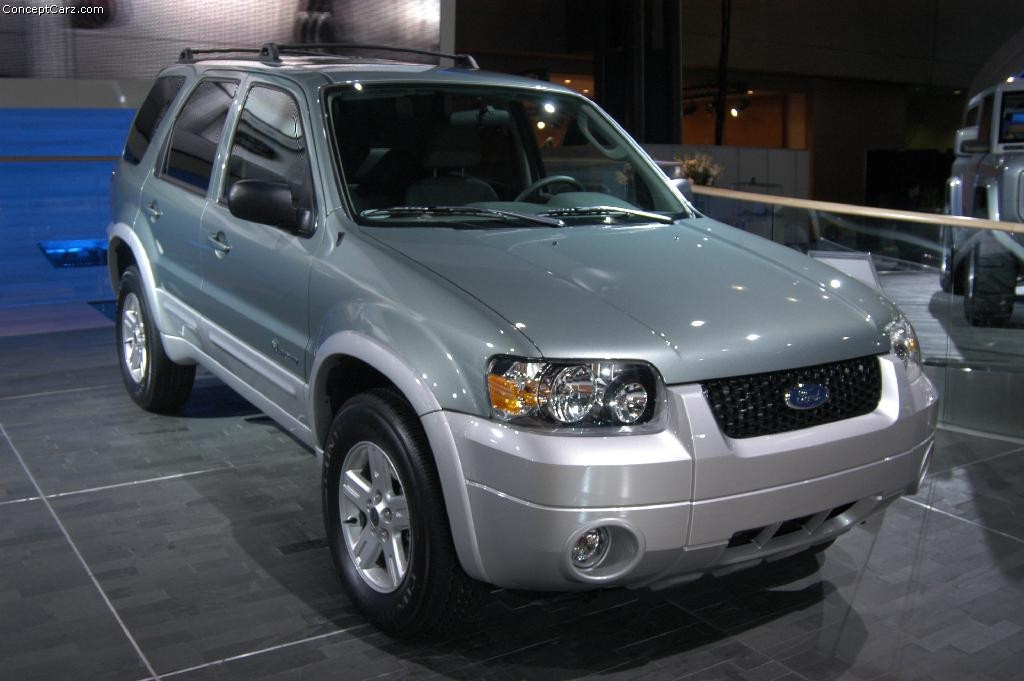
I had an earlier post about the fact that Ford was putting incentives on the hood of Escape Hybrids, and that I thought this was unussual. Two readers commented on this situation, Shawn, who believes that people who buy Hybrids, are not your typical domestic car buyer, and Igor who points out that Ford is not the only manufacturer that is seeing a slowdown in Hybrid SUV sales. So I thought on their comments and the subject in general, and this is my take on it.

Shawn may have a point that many people that would buy Hybrids would not oridnarilly be domestic vehicle customers, but that doesn't mean that there isn't a place in the market for Hybrids. The idea is that people that wouldnt' normally buy Hybrids wil buy them. As gas prices go up and down ( and never down enough) people that wouldn't normally be drawn in by new trends, may want a Hybrid, thinking of the savings in fuel costs. So while Hollywood types and the cultural elite, may not be snapping up Ford Escape Hybrids, maybe some average Joe or Jane would. Escecially if they need a slightly larger vehicle than a Prius.

But Igor points to the fact that Toyota Highlander, Lexus and Honda Accord Hybrids are slowing down in sales. Now when I say they're slowing down, that doesn't mean they're not selling, just that the waiting lists are gone. This was innevitable, as gas prices normalized after the recovery from Hurricane Katrina. But the end of waiting lists is being overhyped by journalists and pundits. Hybrids will have a part of the market in the future, maybe not a huge part, but they're not going away. Especially in fleet sales in the future. The Hybrids that are still selling like hotcakes are the Toyota Prius and Honda Civic, because of their lower prices relative to the others and of course their higher fuel economy.

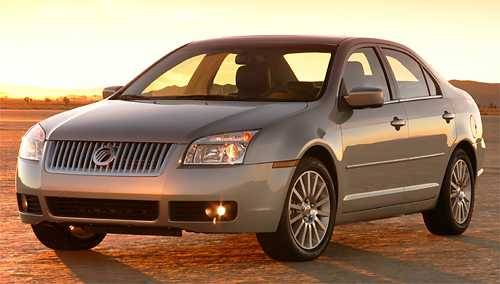
Ford has new Hybrid models in the pipeline, expect a Fusion/Milan and possibly an Edge version and later the 500/Freestyle. Ford hopes to sell up to 250,000 Hybrid units a year when they're fully up to speed. Spread over the different models this should lower the premium paid for a Hybrid slightly, and offer flexability to customers. But Ford should also consider Hybrid versions of their Focus and Fiesta models when they are replace/introduced in the US market. The trend for Hybrids is toward smaller vehicles. There are several common sense reasons for this. First the increase in economy is higher in smaller models, and since Hybrids are better suited to an Urban style of driving it makes sense that smaller models are easier to park in the city. So Hybrid versions of vehicles like the Focus and Fiesta, and possibly and EcoSport would be better for these markets.

Hybrid versions of 500/Freestyle and Fusion/Milan would be better suited to fleet sales, such as taxis, police cars and municipal services. Ford will have the systems ready by 2008 (?) for many of these models and it's a smart move.

But I've said before, Hybrids aren't for everyone, there has to be more options. The higher price of purchase and maintenance of a Hybrid will keep some people away. Ford and others need to suppliment their Hybrid efforts with Diesel and E85 models. Diesels are also slightly more expensive to buy than gas version of the same model, but maintenance is not more expensive, and they are known for lasting longer ( the powertrains anyway.) Add the Bio Fuel situation into the mix and Diesels can make better sense for people that do longer highway commutes and non urban driving. Ford has a small advantage in their Hybrid Escape, since they've been testing E85/Hybrids taking advantage of both technologies. Ford needs to increase the mix of E85 models too.

No single technologie will be enough to eliminate our dependance on foreign oil or help clean the air we breath. What we need is a mix of alternative fuel technology, Hybrids and smaller more efficient vehicles. Remember the Reflex concept that I love so much? It's got a Hybrid/Diesel powertrain with energy reclaimed for braking and solar panels in the roof, so it can achieve fule economy of 65 mpg. Not bad huh? And if the Diesel it's using is Bio Diesel, what little fuel it burns is cleaner than we could have dreamed of a decade ago.

Ford's "Driving American Innovation" campain, is more than words, they're working with all of these technologies and more. Ford has been working with Hydraulic Launch Assist and Hydrogen Internal Combustion Engines, as well as Direct Gasoline Injection (Mazda) so they are covering all the bases and if they can survive these tough times, can be in a position to respond to consumer's preferences. A good mix of these technologies is what I hope to see from Ford over the next few years.

Tuesday, March 21, 2006

Wood chips and corn stalks? and more Ethanol from AutoBlog


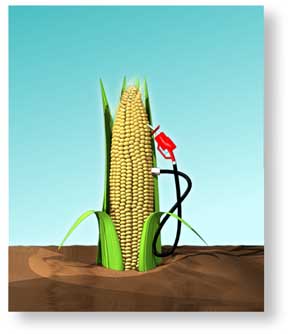
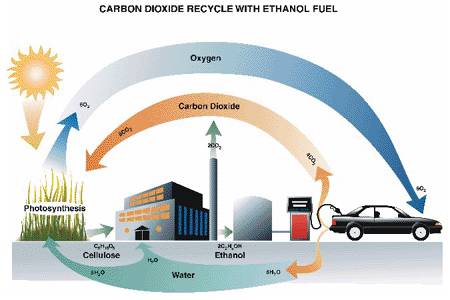
Seems to be a lot of alternative fuel talk over at AutoBlog today. First is the article linked in the title, about Bio Mass fuels and then this article later in the afternoon about Ethanol . And you all should know by now, that I'm a big believer in Bio Diesel and Ethanol. These two fuels have so much potential on very different fronts. From health benefits and evironmental friendliness to economic boosts and national security improvements. But as many point out on different forums, the petrolium industry isn't jumping at the prospects of non petrolium fuels. MBTE, and adative used in gasoline is being phased out, because of health issues, and is expected to be replaced in gasoline, in levels less than or equal to 10%, so it can be used in any gasoline powered vehicle, not just E85 prepped ones.

I've said it before, legislation may be needed to give industry the incentive or push to create the infrastructure to create and distribute these bio fuels. I pointed out in a post last week, that the largest effort at bio fuel produciton seems to be a French owned Agri-Business in the midwest. We need more domestic investment and involvement for this fledgling industry, or we will be replacing dependance on foreign oil with dependance on foreign Ethanol.

I don't care if you use wood chips, corn, grass clippings or algae, hell use a combination of all of them if need be, but this is an exciting time in our history and I'd hate to see it pass. With all the groups that seem to be supportive of bio fuels including the American Lung Association of the Midwest, General Motors, Ford Motor Company, polaticians, celebrities like Willie Nelson and our President and don't let me forget the environmentalists, who we all used to laugh at, but now don't laugh as hard. There are just too many good points and not enough detractors for this not to go through. To be honest, I'd rather pay $3.50 a gallon for some domestically produced fuel than $2.65 for Gasoline.

Saturday, March 18, 2006

National BioDiesel Day? AutoBlog has the scoop

Maybe in a few years it can be changed to National Fuel Independance Day, but for now it's National BioDiesel Day! Very interesting article and link to the site anouncing and explaing the event at AutoBlog. Above is a map of Arab Oil Fields, the main source for our national dependance. The "Crack Dealers" in Sheets, that cry for our deaths as they count our dollars.
It's important that we take these issues seriously. It's easy to laugh off "National BioDiesel Day" as some "Greenie" non-event, but that would be to our shame. I see Bio Fuels, especially Bio Diesel as one of the most important changes this country NEEDS to make. It just makes too much sense.

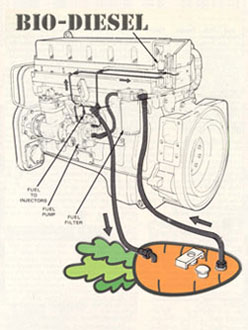
Yes BioDiesel is difficult to buy at this time, and depending on where you buy it, may cost slightly more, but it burns much cleaner than Petro Diesel and requires no modification to run in any Diesel Powered Vehicle. Diesel, the man originally designed his engines to run on Peanut Oil, and despite the development and evolution of Diesel powerplants over the last century, you can take any Diesel vehicle and run them on BioDiesel, with no modifications. And you'd be improving the Environment, Health of your neighbor, Economy and National Security with no more effort than filling your tank. And BioDiesel would work so well in some of those great European Ford models that we don't get!

I'll take the Mondeo Estate with the 2.0TDCI and 6 speed manual!

Tuesday, March 14, 2006

Reader asks, "Can I convert my Ford to run on E85?"


I received an interesting email from a couple that have a Bronco II and wanted to know what they need to do in order to run it on E85. Now just for the record, I'm not an automotive mechanic or engineer, I don't even do my own maintenance on my truck. But this raised some interest on my part. Their Bronco II is an 88 with the 2.9L V6. So I did an internet search and found the article linked above. It says that at one point it was looking like Conversion kits would be marketed, but Federal rules were too much of a roadblock. But I'm not sure this would apply to do it yourself types.

Now, this is just a guess on my part, but in the case of the Bronco II, there may be an answer using Factory Ford parts. The Bronco II is based on Ranger mechanicals, and Ford did indeed offer Flex Fuel Rangers, capable to run on E85. So many of the Flex Fuel parts should be available in Salvage yards or even from your Ford dealer. In 1999 when I bought my Ranger, there was an option for a 3.0L V6 Flex Fuel, so the computer, fuel tank and lines should be a bolt over swap. It may be advisable to swap the engine and transmission as well.

I'll try and follow up on this subject over coming days.

Monday, March 13, 2006

French own company starts first large BioFuel production, it's a begining

A promissing story over at AutoBlog, on a French owned Agri-Business starting large scale production of Bio Diesel. I'd like to see more American owned business take this leap, and I think we will. The unique oportunity we may see here, is that companies not ordinarilly associated with fuel production, can use what would be natural byproducts of their operations to help in the production of alternative fuels. Just think Anheiser Bush or Miller Beer could be filling your tank? Or how about Purina, the makers of animal feed? It's not such a stretch when you realize they have half the infrastructure in place, and it gives them a way to diversify with little risk.

The large oil companies can't be trusted to volutarilly make the switch to bio fuels, it would be like asking a crack dealer to switch to candy. So maybe what the US needs is legislation to incentivize bio fuel production and distribution. I had read recently that Ford Motor Company was lobbying in Washington. If Brazil and Sweeden can do it, why not the US?

I'm not so naieve as to believe that a sudden availability will slash our dependance on foreign oil over night. It will take years for our current vehicles to reach the end of their lives and be replaced by new ones. But with government tax breaks for owners and manufacturers to convert some older vehicles for Ethanol or E85, and the fact that Diesel vehicles require no retrofit at all. It could be possible within 10-15 years to cut our use of foreign oil by as much as 50%. It's going to be a cumulative effort of alternative fuel production and distribution, more fuel efficient powertrains, partial retrofit of existing vehicles and education of consumers.

I'm sure that E85 retrofits for older classic cars would be minimal and performance could be improved.

Thursday, March 09, 2006

European push for Alternative Energy at AutoBlog


In an interesting post at AutoBlog, they discuss briefly European initatives toward alternative fuels. A new European organization called Alliance for Synthetic Fuels in Europe ASFE see the United Press International press release , is trying to develop and encourage the use of synthetic fuels made from natural gas (GTL) coal (CTL) and BioMass (BTL.) AutoBlog quote : "ASFE is apparently touting synthetic fuels as Europe's solution to reducing its petroleum dependency, in contrast to the U.S. government's promotion of ethanol."

I think any program that works towards the reduction of reliance on petrolium is a good thing. But as a layman, I notice a couple of problems and questions. First is GTL or Gas to Liquid, the gas is Natural Gas, which burns cleaner than Gasoline, but still releases greenhouse gases and is not an unlimited resource. CTL or Coal to Liquid, is worse in my opinion, again not a renewable resource, and also a polutant as bad as petrolium. The last BTL or BioMass to Liquid, well they're not clear on that, but that seems to be the cleanest of the three. Here's a definition I found online for Biomass . As it states, the "green-ness" of the biomass varies on what is used.

I still think that for the US, Bio Diesel and Ethanol are the nearest solution for our indepndance from foreign oil. The benefits would be to our economy, health, environment and national security.

Tuesday, March 07, 2006

Recap of Alternative Fuel posts; how to save the world ?


I realized recently that I've been ranting about Ethanol/E85, BioDiesel, Alternative Energy and Fuel Eocnomy for months now. So for no real reason I went back several months of my archives and looked up how many times. So here's the list;

1 2 3 4 5 6 7 8 9 10 11 12 13 14 15 16 17 18 19

Each number will bring you to a past post on the subject, going as far back as last September.

Monday, March 06, 2006

Autoline Detroit, PSA Diesel Hybrid, and what it should mean for Ford.

I was watching Autoline Detroit, as I do every Sunday, and John McElroy was talking about new technologies and had a special segment on PSA (Citreon/Peugeot) Diesel Hybrid concept. He was fawning over it, and with it's combined fuel economy of 70 mpg, it's impressive. But I was yelling at the TV screeen, trying to remind John, that PSA isn't the only one that has such a concept. The Ford Reflex is a Diesel Hybrid! Ok, maybe the Reflex isn't as close to production, and it's hybrid system not as practical. But Ford has Hybrid and Diesels in their product mix.
Why can't Ford, combine the two existing technologies into the Fiesta and beet PSA to market? After all, the Ford Duratorq Diesels are a joint design with PSA, so they have half already. Couldn't this be mated with a scaled down verison of the Escape Hybrid's transmission and electric motor system?

AutoBlog points to the land of the rising sun, with more alternative fuel technology

AutoBlog points to an article on Japanese research into alternative energy sources, including Ethanol. Now we've heard of several sources for Ethanol, crops like corn, soybean and switchgrass as well as Algae. But the Japanese are looking elsewhere.
Here, is where they're looking, cow manure. I don't think this is really a new idea. I mean..
Ask this guy nicely, and he may tell you how he made fuel from pig manure.

From what I've read online, algae seems to give the most output per acre, but what ever it takes.

Monday, February 27, 2006

The AutoProphet weighs in on E85 and I was amused to see who commented on his post.

I know, you're thinking enough with the Ethanol and Bio Fuel alread. But it's an interesting subject and one I feel that Ford has so many options available. But actually I was reading the AutoProphet's blog today, and it looks like we were both tapping the keyboards at the same time Sunday, about similar subjects, Ethanol!! So click on over and read what an industry insider and Engineer has to say on the subject. AutoProphet points to how this is an issue that has created unusal alliances, such as Environmentalists, Conservatives and Big Business. But one thing that really amused me was who the first commentor on the post was; Commentor over at AutoProphet

Sunday, February 26, 2006

Sunday thoughts on E85 and fuel conservation in general in respect to Ford and it's partners.

As usual for a Sunday, I was reading my car magazines (the few I still bother with) and watching my car shows, including Autoline Detroit on Speed channel. And this morning John McElroy had an interesting discusion with two execs from GM about their new marketing push on E85. The thrust of it, was that GM is pushing awareness of it's vehicles' ability to run on the E85 bio fuel blend, and discussed Brazil's success with their shift to the bio fuel blends. The commentators acknowledged that all of the domestic auto makers have been making Flex Fuel vehicles for years, with little fan fair. I've commented on it before, that many Fords over the years including some trucks have been flex fuel capable. And I've read over the last few months how Ford and now GM are working with suppliers to slowly create the infrastructure for the Ethanol blends. I know it's only a drop in the bucket now, but it's a start. So that got me thinking about Ford's partners and overseas operations.
In Europe Diesels are the biggest thrust by companies looking to improve the fuel efficiency of their vehicles and Ford and their partners have a very good range of engines and share technologies fairly well. So are Ford and partner vehicles in Europe also Flex Fuel capable? The Petrol V6 engines in many Ford and partner vehicles share DNA, so it shouldn't be overly expensive to make the switch if they aren't. What about the smaller engines? The already fuel efficient petrol I4 engines? And finally how about the big V8 and V12 engines from Jaguar and Aston Martin? Well they also share DNA with the lowly corporate 3.0 DOHC V6, so it theoretically should be easy to make the adjustments. Which from everything I've read on Ethanol, consist mainly of a sensor in the fuel system to read the fuel mixture and adjust programming for efficient combustion and probably a new fuel tank and lines. Ethanoll actually burns cleaner and has an octane advantage over Petrol, so it shouldn't affect performance even on these high priced models.
Now Australia may be a different story, but not really a problem. The Australian Ford powerplants are variations of the 4.0 I6 that is not shared with Europe or North America, and home grown versions of the Modular V8 seen in North America and select other markets globally. But again, if it's just a matter of a few hundred dollars per car to modify, and consisting of partial upgrade to fuel system and programming, it doesn't sound too dificult. I know Diesels are sold in Australia, but wonder what the market mix is between Petrol and Diesel? Also what is the Hybrid situation? Can someone from down under enlighten me? Ben ??
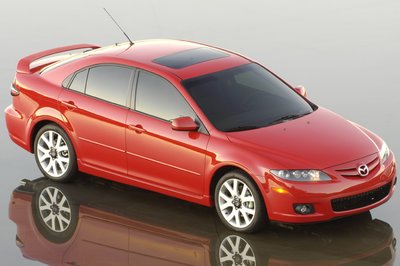
What about Mazda? The V6s Mazda use are also developments of the Ford 3.0, so the same modifications should be an easy move for them. And in the US market at least, E85 doesn't seem to be in the game plan for most Japanese marques. It could be a good marketing move for Mazda to make the switch and beat the other Japanese companies to the punch. Mazda doesn't seem to be whole heartedly onboard with Hybrid Electrics either, other than the Tribute which is going to be shut down soon. I've read that in Japan they are working on Hydrogen technologies, as everyone world wide seems to be, but what will their "Eco" card be? Could it be further development of the Turbo Direct Injection technology that we see in the MazdaSpeed6, and upcoming CX7 and MazdaSpeed3? Applying that technology to smaller displacement engines would allow a 1 liter engine to make the power a 2 liter engine traditionally makes, while still achieving greater gas milage, or so I've been told/read. Will Mazda blaze it's own path or jump on the E85 bandwagon, even just for the short term. I don't see how it could hurt.
And for all those that fear the loss of performance, DON'T, it should be right on par with what you have experienced from Gasoline only, maybe even slightly better. The Mustang's 4.0 SOHC V6, that it shares with the Ranger, also shares DNA with the 3.0 V6 (from the Ranger), and since the modifications are confined to fuel system and programming, should easily transfer.

Don't get me wrong, it's not as if I own stock in an Ethanol company, and I don't think E85 or Bio Diesel blends will be the magic cure. But they should be easy transitions, with major payoffs for the environement, economy and national security. It seems like such a win win situation.

(updates in red, to clarify which 3.0 V6) Both the Taurus and Ranger were offered as Flex Fuel vehicles, both with 3.0L V6 engines, but no means the same. The Ranger was the Cologne family V6.

Wednesday, February 22, 2006

Algae as bio diesel?

Skierpage, left a comment on my Bio Fuel post below, with a link to a Wikipedia article on Bio Diesel. What really interested me was the list of plants used and their yeild per acre. Amazingly algae was the highest yeild and according to the article, can be made at existing water sewage treatment plants.

Of course the biggest problems with Bio Diesel are water and gelling. Water can condense in storage tanks and Bio Diesel gels at a higher temp than petro Diesel. Both can be a problem in colder climates. But blending the two forms of fuel seems to solve that problem.

Read the article when you have a chance, it's amazing what the benefits of Bio Diesel are.

Sunday, February 19, 2006

First Brazil, now Sweden, when the US?

Petrolium oil products and fuels have been in use for over one hundred years. The primary fuel for all motor vehicles. No news there, right? But is it the only fuel available? Is it the best? Where does it come from?

Well, most of it, comes from the Middle East, but not all. Middle easter oil is just the most "accesable" oil reserves in the world. There is also oil in North America, the North Atlantic, South America and the Gulf of Mexico. But a large portion of our oil comes from this vilotile armpit of the world, the sliver of land connecting Africa to Asia, once the birthplace of great cultures and religions, now a powder keg waiting for a spark. This area of the world which if you look at a map or globe, is not very large at all, keeps the rest of the world jumping through hoops, because of oil. Let's face it, if it wasn't for the oil, not many of us would give a damn about the place. But what are the alternatives? What would we do without Arab oil?
Bio Fuels, like Ethanol and BioDiesel that's what! It amazes me, that as far back as 1916 Henry Ford talked about Petrolium based fuels running out and proposed Ethanol as an alternative. Even saying it would be a way to improve the plight of US farmers, yet now it's 2006, 90 years later, and we're still sitting with our thumbs up our rears, wondering how to break our dependance on foreign oil.
A few weeks ago, I read that Brazil was passing legislation requiring that all vehicles sold there, be bio fuel capable. Realizing that unlike their neighbor Venezuela, they did not have petrolium, but do have the ability to grow crops capable of producing Ethanal based fuels. By the way, did you know that Venezuela and Mexico are members of OPEC? But back to the point, Brazil saw that they had a weekness and a possible way to decrease that while improving their own economy.
Now today, I read in AutoBlog, that Sweden, tiny little Sweden, has started along their own path to independance from oil. They plan to make the swithc to biol fuels by the year 2020. The Swedes are a technically proficient economy, but not a huge land mass. I wonder if they have the farm land to grow enough bio fuel?
So I wonder where that leaves the US? I mean, we're dependant on foreign oil, but we have vast tracts of land, and a massive agricultural base. I've always been told that we pay farmers not to grow certain crops, and paid subsidies for that. But on the other hand, we have situations where farmers over the last 20 years or more, have been loosing the family farm, because they've become so sensative to crop price fluctuations and overextended on loans. Couldn't we grow enough corn or soy beans to supply a substantial amount of bio fuels? Wouldn't one of the effects be the stabilization of our agricultural sector? If farmers are selling crops to be made into fuel, then wouldn't we save all the federal subsidies? I mean it sounds like a win win situation.
How about this, if we're growing more crops, that produce more oxygen, and burning bio fuels that release less polutants, aren't we also helping our ecology? Wow, another win win situation.
I know I'm oversimplifying this, nothing is that clear cut is it? I mean I keep on hearing how bio fuels are not as good as petrolium, but the funny thing is I also hear that they perform just as well. Who's right? I don't think it matters really. Because even if you got slightly worse milage from bio fuel, which every indicator does not support, we would still be fuel independant.

So I'm glad that GW Bush supports bio fuels, I'm thrilled that Willie Nelson supports bio fuels, I love the fact that GM is doing a media blitz on their E85 vehicles and Bill Ford is blazing the "Way Forward" by "Driving American Inovation," but what is that really getting us? I mean Ford has been selling "Flex Fuel" vehicles for years, I've known people who drove them, even if they didn't realize their vehicles were flex fuel, but what good is that if you can't find the fuel?

Will it be another 90 years before we can fill our tanks without supporting terrorist or being held fiscal hostage by fascists in robes, who are calling us the "Great Satan" on one hand, while spending our money with the other? What we need now is an infrastructure to make and distribute bio fuels, and possibly legislation demanding that all vehicles sold from now on are capable of running on said fuels.

Tuesday, February 14, 2006

Past articles on Hydraulic Hybrid systems


OK, as an update to previous post on the Ford Hydaulic Launch Assist system, and it's possible roots in Inventor's Inertial Storage Transmission system. It was Jalopnik where I originally heard of this and they link to the Mother Earth article. I may have been mistakend about him being a Postal worker also.

  • AutoBlog article on EPA and Hydrauics


  • Jalopnik article on Hydraulic hybrids


  • Mother Earth article on Hydraulic hybrids

  • And for those who believe in conspiracy theories, like the government keeping a 200 mpg carburator hidden; http://byronw.www1host.com/

    60 MPG F-150? Unlikely, but AutoBlog is reporting on a website that discusses it.

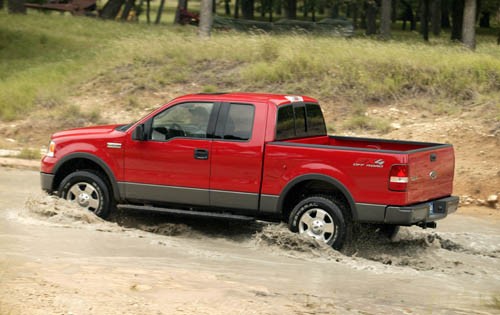
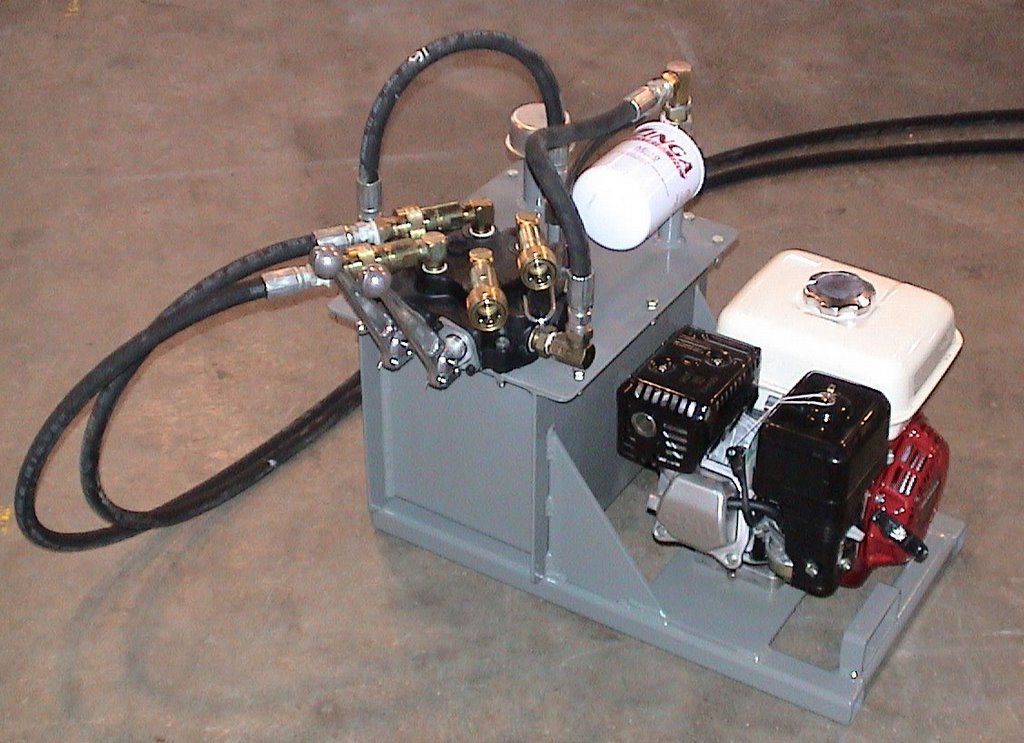
    The guys over at AutoBlog have an article and link discussing the possability of a Hydraulic Hybrid F150 by 2008. Even they are sceptical. The system would use a hydraulic pump and tank to assist with getting the truck moving, much like an Electric Hybrid does.
    Hydraulic pressure can be very powerful and efficient, and there are many examples of hydraulics in use around you every day. Not just LowRiders and construction equipment.
    Now AutoBlog doesn't reference this, and I can't find the article now, but I had read last year of a postal worker who in his spare time, had invented just such a system and had been running his Ford Granada as a rolling laboratory.
    Hydraulics are nothing new to cars, automatic transmissions are basically hydraulicly controlled, as our our brakes on all modern cars. Most power take off (PTO) accessories on heavy equipment are hydraulic.
    And in the 50's Citreon came out with this the DS19, with Hydraulic/Pneumatic suspension, brakes, steering and transmission, allowing the car to have a fully adjustable ride height and comfortable and capable handling .

    So while I originally thought AutoBlog had been suckered into a hoax, who knows a system like this could be in the works. I do have a doubt about the timeframe, but Ford is commited to alternative technologies and an F150 that could achieve 60 mpg would make them king of the truck world. If I can find the original article on the inventor I mentioned I'll add the link. If I'm no mistaken, AutoBlog reported on him last year, and some government agency was investing in the technology.

    Click the link in header to read more.

    Wednesday, February 08, 2006

    Autoblog article on Ford's "Ethanol corridor"


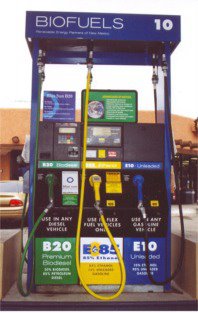
    Getting back to what it's about, THE CARS, I was reading AutoBlog (link in title) about how Ford Motor Company is going to create an Ethanol Corridor with a partner Sun Energy. Well there is criticism about this stating that 40 pumps in 2 states hardly constitutes a corridor, and they're right. But Ford isn't in the Fuel business, they build cars, so any movement is forward movement. If criticism is warranted, it should be towards our government (states and federal) and the Petroleum industry. While Exxon/Mobil makes record proffits, and no progress towards making E85 available, why criticize Ford?

    Ford has been making "Flex Fuel" Vehicles for years, I remember in 1999 when I bought my Ranger, Ford offered flex fuel Ranger and Taurus models, with no big anouncement. Then as now, the problem has not been with the vehicles sold, but the availability of the fuel.

    After 9/11 our government should have pushed harder for the domestic production of Bio Fuels, like E-85 and Bio Diesel. Bio Diesel is a better fuel than petro Diesel, and E-85 greatly reduces the amount of foreign oil we need to import. So if we like Brazil legislated the bio fuel usage in this country, we would benefit by lower dependance on foreign oil, more investment on our own shores and a cleaner environment. So what's the down side? Why is so clear a solution put in place? It's because of BIG OIL COMPANIES, they love the increases in gas prices, while we suffer and our economy slows, they rake in huge profits.

    I applaud Ford's move, even if it is just a drop in the bucket, it's a move in the right direction.

    Friday, January 20, 2006

    Alternative fuel technology nothing new for Ford

    I always remember one thing my father told me "There are no more original ideas, everything has been thought of before." And you know what? He was right. Today, we talk about alternative fuels and electric vehicles as if they are new technologies. But in fact, some of the earliest "horseless carriages" were electric and steam driven. Henry Ford from day one concentrated on gas powered automobiles and early on was encouraged by the prompting of Thomas Edison to keep up his pursuit of gas powered automobiles. Edison knew what we know now, that the weight of the batteries and the limited range of electric vehicles would always be and issue.
    Recently I have been reading a series of books on the life and times of Henry Ford and his companies. And some things were a major surpise to me. One of those things was the fact that even though Henry Ford was a proponent of the Internal Combustion Engine, even he recognized that Petrolium based fuels would, like the dinosours that they are derived from, cease to exist one day. So as early as 1916 Henry Ford started to research and support the use of corn and potato based alcohol fuesl such as Ethanol.
    Now, this hit me like a sack of potatoes when I read it (sorry, I know, terrible pun.) But think about this, in 1916 Henry Ford was proposing Bio Fuels as a replacement for Gasoline!

    Now I know old Henry had his faults, his ego and his bigotry among them. But it's undeniable that the man was a visionary, if not the genius he billed himself to be. 90 years ago, Ford Motor Company was looking into some of the same technologies that we are revisiting today. And another indisputable fact is that while there were hundreds of auto manufacturers over the years, Ford was one of the earliest and historically the most sucessful and inovative over the long run.

    Another one of Henry Ford's projects was production using Soy based products. He envisioned soy based fabrics and early plastics and experimented for many years and invested heavily in Soy plantations. Love him or hate him, the man was a visionary.

    And of course now Bill Ford jr, his great grandson, is trying to bring Ford back into the inovation business with some of those same ideas. Do any of you remember the Model U ? It was a concept vehicle from just a few years ago, and relied on some of these same ideas, of recyclable structure and alternative energy.

    Just food for though.

    Wednesday, October 12, 2005

    Are Hybrids the answer? Not alone and not for everyone

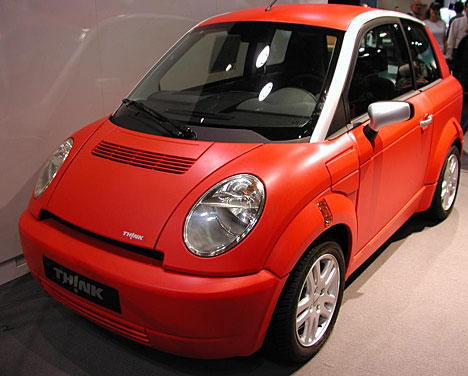
    I've been reading a lot of blogs today and the fur seems to be flying in every direction concerning Hybrid vehicles, and I'm as guilty as anyone, with my latest post telling Ford to produce more Hybrids. Many people mistakenly think of Hybrids as the solution to our energy needs, and the simple truth is they aren't, not for everyone at least. Don't get me wrong, they're great for a portion of the driving public that would include me. The truth about Hybrids are that they only really make sense for people that do an urban or even suburban driving circuit. For people that commute long distances there is absolutely no relief. The same goes for Electric cars like the now defunct Ford Think, pictured above. Electric cars do not work in the US almost at all. The range of them is limited and the size of them makes them unsafe compared to the average car.
    Nobody wants to drive a golf cart with a roof on the highway, where you can be knocked on your side by the tail wind of a passing tractor trailer.
    Gasoline/Electric Hybrids solve several problems of the Electric cars, but not all. The range is basically unlimited, because you have a gas engine that takes over and most Hybrids use braking to recharge the batteries. But Hybrids achieve their best milage on a "city" driving loop and on the highway perform much like their gasoline counterparts. As an example the Ford Escape achieves 34 mpg in the city and 30 mpg on the highway. So for commuters traveling into cities from far flung suburban communities, they really have a limited benefit.

    My personal driving routine would be a perfect fit for a Hybrid, as I drive about 5 miles to work each way and most of driving is done in stop and go traffic, with the ocasional trip on the highway. But many people I know drive 40-50 miles each way on the highway, where the Hybrid has no advantage.

    The answers to our problem are manifold, a combination of Hybrids and alternative fuel vehicles, as well as more efficient gasoline and Diesel vehicles. Ford's partner Mazda is rolling out the MazdaSpeed6 with it's 2.3 L Direct Injection Turbo I-4, making over 270 hp and still achieving decent milage. Many pundits have said, and I agree that the future of the automobile as we know it is going to involve many smaller displacement motors with this type of technology.

    I remember in the 80's many auto makers were wild about Turbos, Chrysler put a turbo in almost everything they sold, including the mini vans. Ford jumped on the wagon too, with the Superb Mustang SVO and the almost ran Turob GT Mustangs, as well as turbo Escort, EXP, Merkur and Thunderbird. GM's Buick division seemed the champion of turbo technology across their model line up as well. Mitsubishi had big hits with their Turbo Codria/Tredia and Starion models long before the Evo came to these shores. Turbos were nothing new, GM had them in early Corvairs and many Diesels had turbos for years. But in the 80's the mantra was V-8 power with 4 cyl milage. And it was a turbo boon for a while. Then people experienced turbo failures. Turbos are great, but early turbos were prone to failure because of lubrication and heat related problems. So turbos fell out of fashion. Only showing up on high end sporty cars and the Chevy Sprint ( Don't ask me why.)
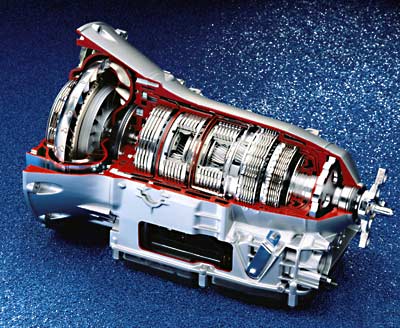
    Turbo technology as well as fuel injection and engine management have come a long way. I'm not saying that's the solution either. I think that all of them are the answer. Some Bio Fuel Diesel vehicles, some Electric and Hybrid, and a redesign of the current powertrains to include technology to increase fuel economy while not loosing performance. We can have our cake and eat it too.

    Ford is poised to take bold steps if they dare, and lead the American Auto Industry into the future, as they are the only domestic manufacturer with viable Hybrids right now and with the Direct Injection Turbo in the toolbox, things could be looking better. That is if they can survive long enough to implement these technologies.

    But what the hell do I know?

    Saturday, September 24, 2005

    Picture and additional story on Focus Hydrogen Fuel Cell cars at AutoBlog


    Here is a picture I found on AutoBlog of the Hydrogen Fuel Cell Hybrid Foci, that were sent to Florida for evaluation. There are 30 in total being sent to different evaluation fleets in the US, Canada and Germany. AutoBlog has a link to the Ford press release, which gives some information on the Fuel Cell Hybrid system.

    If readers feel I'm getting obsessed with this subject, fear not, I'll be posting about other Ford realted topics very soon. It just seems important as fuel prices rise again.

    Friday, September 23, 2005

    Hydrogen Fuel Cell Focus fleet to Florida, on MPH Online


    OK, great news, Ford is delivering a small fleet of Hydrogen Fuel Cell Focus sedans to Florida. I don't have a picture of the Hydrogen Foci, so just used stock photos I do have.

    This on the heels of the two anouncements from Ford is a real sign of progress.
    Click the link and read the article on MPH Online.